
More drivers in Humble and Kingwood are making the switch to electric vehicles, and almost every one of them hits the same question in the first week of ownership: where is my car going to charge? You can get by with a standard 120 volt outlet, but most owners find it too slow for daily driving. A home charging station changes that, and it is usually a one-day job once your electrical system is ready for it. This guide covers what a home installation actually involves, why your electrical panel matters more than anything else, and how to get your garage or driveway prepped so the install goes smoothly.
Why Most Humble Homeowners Skip Level 1 and Go Level 2
Every EV can charge off a basic 120 volt household outlet, called Level 1 charging. It works, but it adds only about three to five miles of range per hour. If you drive ten miles a day, that is a long evening on the cord. Level 2 charging runs on a dedicated 240 volt circuit, the same kind of power your dryer uses, and typically adds 25 to 30 miles of range per hour. That means you can park in the evening, wake up to a full charge, and never plan your weekend around a public station.
There is also a climate factor. With this week’s forecast calling for highs near 100 degrees, your AC is already pulling hard all day. Level 2 lets you top off the car overnight on a predictable schedule instead of hunting for fast chargers during the hottest part of the afternoon. If you are shopping for a charger or want help matching one to your driving habits, our EV charger installation page walks through the charger options we install.
Your Electrical Panel Is the First Thing We Check
A charger sounds like a simple plug-in appliance, but the electrical work behind it is what determines whether the install is a half day or a project. Here is what drives the outcome.
How Much Power a Level 2 Charger Draws
A typical home Level 2 charger runs on a dedicated 240 volt circuit sized at 40 or 50 amps. That is a continuous load, meaning it draws power for hours at a time, not in short bursts like a microwave. The circuit has to be dedicated to the charger, and it has to start at a panel that still has the capacity to carry it.
What Happens When the Panel Cannot Keep Up
Many homes in Kingwood and Humble were built before the mid-1990s with 100 or 150 amp service. Those panels were sized for a house without a central air system running eight hours a day, and now they are asked to carry the AC, the well pump, a workshop, and a car charging overnight. When the panel does not have spare capacity, we have three options to walk you through: adding a subpanel near the garage, installing load management so the house and charger share the available power, or upgrading the main panel. Each has a different cost and timeline, and the right one depends on your home. If you have never had your panel assessed, our electrical panels service covers inspections, upgrades, and full replacements.
Getting a Full Picture of Your Load
The cleanest way to know where you stand is a proper evaluation of the whole system, not a guess from the panel door. An electrical inspection shows us your service size, how much of it is in use, and whether the charger, a future heat pump, or a second vehicle would tip you over. It is the same check we do before most installs, so if you are in planning mode, it is worth doing now.
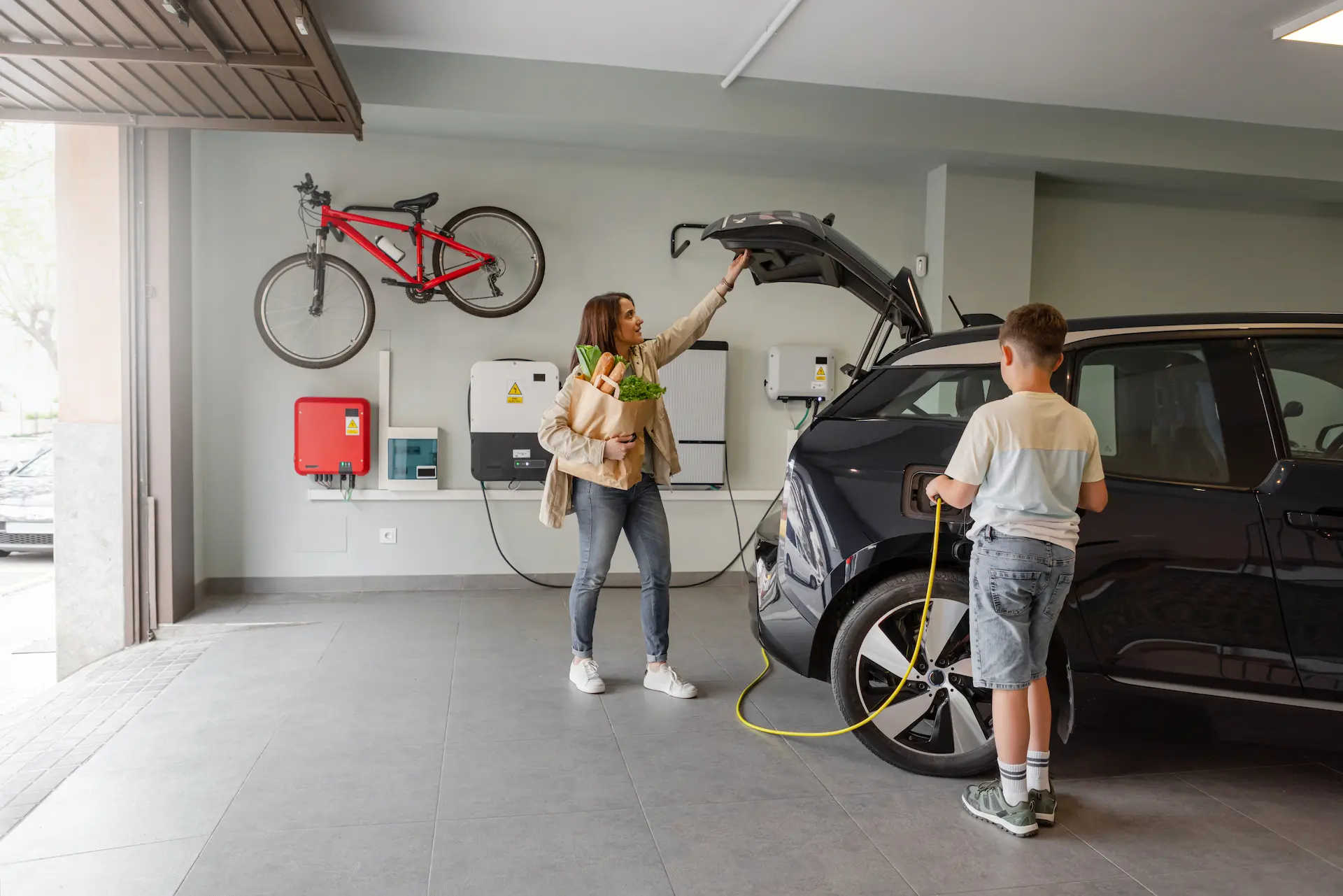
Where the Charger Goes Changes the Job
The single biggest factor in installation cost and complexity is the distance between your panel and the spot where the car will actually park. A few practical notes:
- If the garage wall is close to the panel, the run is short, the wiring is minimal, and the job stays simple.
- If the car parks outside, expect trenching and a conduit run, which adds time and cost. A covered carport wall is easier than a free-standing pole.
- Park in your intended spot for a week before you book. Homeowners are surprised how often the “convenient” parking spot is the one farthest from the panel.
- Decide now whether the unit will sit on the interior or exterior wall. Exterior installs need weather-rated enclosures, which we handle, but it is easier to plan for it up front.
What the Installation Process Looks Like
Here is the sequence we follow, and it matches what is on our EV charger installation service page:
- Site evaluation. We look at your panel, your load, the parking spot, and the likely cable run, then recommend the setup that fits your vehicle and driving.
- Plan and quote. You get a clear plan covering the charger, the wiring, and any panel work, with costs spelled out before we start.
- Panel work if needed. If your system lacks capacity, the upgrade or subpanel is completed first and verified before the charger comes in.
- Installation. Our licensed electricians install the dedicated circuit and the charger to code and to the manufacturer’s specs.
- Testing and walkthrough. We confirm the charger operates correctly under load and show you how to use it, including any app features.
Should You Add Whole Home Surge Protection at the Same Time?
Yes, if you do not have it yet. A Level 2 charger is one of the more sensitive electrical devices in your home, and its charging electronics sit on a circuit that can be exposed to the same grid spikes that hit the rest of the house. Late summer is exactly when those spikes cluster: storms roll through, the grid flickers as neighborhoods re-energize, and every solid-state component in the garage takes the hit. Whole home surge protection installs at your main panel and diverts the spike before it reaches the charger, the AC, and everything else. Since the electrician is already working at the panel for the charger, it is the most convenient time to add it. You can see how the system works on our whole home surge protection page.
What to Expect on Cost
There is no single price for a charger install, and anyone quoting one without seeing your panel is guessing. The variables are the distance from the panel, whether panel work is needed, the tier of charger you choose, and any exterior trenching. What you can count on from us is a written quote before the work starts, with every component listed, so the number you approve is the number you pay. That is standard practice across our electrical services, and it is how we have kept the process straight since 1985.
Prep Checklist Before the Tech Arrives
- Confirm where the car will park, and keep that spot clear on install day.
- Have access to the panel location and the garage or exterior wall where the unit will mount.
- If you have already bought a charger, know the model. If you have not, tell us your vehicle and daily miles and we will match one to it.
- Clear a path from the driveway to the panel if the run goes along the house exterior.
- If pets roam the garage, let us know when you book so we can plan around them.
Frequently Asked Questions
Can I just plug the EV into my dryer outlet?
You can, and many owners do it for a few days. A permanent setup should be a dedicated circuit with the correct breaker, wiring, and outlet type, sized to the charger. Sharing the dryer circuit, or running an extension cord through the garage, creates a fire risk and can void the charger’s warranty. A dedicated circuit also keeps your dryer usable while the car charges.
How long does the installation take?
When the panel is ready, most installs take a few hours to a day, including the final test. If a panel upgrade or subpanel is required, that is a separate job we schedule first, and the charger goes in once it is verified. We tell you which scenario applies to your home during the site evaluation, so there are no surprises.
Will a home charger raise my electric bill a lot?
It adds usage, yes, because the car now charges at home instead of not at all. For most drivers, charging at home still costs less per mile than filling up with gas, especially when you schedule the charge for overnight hours when your rate is lower. The charger’s app or a smart timer makes that easy to automate.
Can you install a charger I already purchased?
We install a range of home chargers, and we are happy to work with a unit you have already bought. Bring the model number to your consultation and we will confirm the circuit it needs. If you would rather not choose, we will recommend options that fit your vehicle and how you drive.
Book Your Charger Installation
If you drive an EV, or you are a few months from buying one, the home charger is the piece that makes the switch easy. Call 346-209-6112 to request a site evaluation for EV charger installation. Our electricians serve Humble, Kingwood, Atascocita, Spring, Cypress, The Woodlands, and surrounding communities, and the evaluation is the same visit that tells you exactly what the install involves and what it costs.


NO LEMON GUARANTEE

$500 NO FRUSTRATION GUARANTEE

30% UTILITY SAVINGS GUARANTEE